
Under the theme “Breaking the silence, rebuilding hope”, the team brought stakeholders together to improve access to GBVF information and support. Their work took them into student residences and involved weekly meetings to follow up on cases and referrals.
Starting with what students experience
If you are worried about being judged or victimised, knowing that support exists does not necessarily make it easy to ask for help. You may have questions about who will hear your story or what will happen after you report.
These concerns were relevant to the team’s work. Stigma and fear of victimisation were among the obstacles they encountered, prompting them to involve peer educators, introduce anonymous reporting tools and assure confidentiality.
They also used peer-led dialogues, drama and discussions in residences to encourage engagement beyond posters. This gave students different ways to participate in conversations about GBVF.
When examinations limited the time available, the team moved sessions to lunchtime and evenings in residences. An after-hours WhatsApp support line added another way to seek assistance. These adjustments recognised that support needs to be accessible within the routines and pressures of student life.
Keeping track of cases and referrals
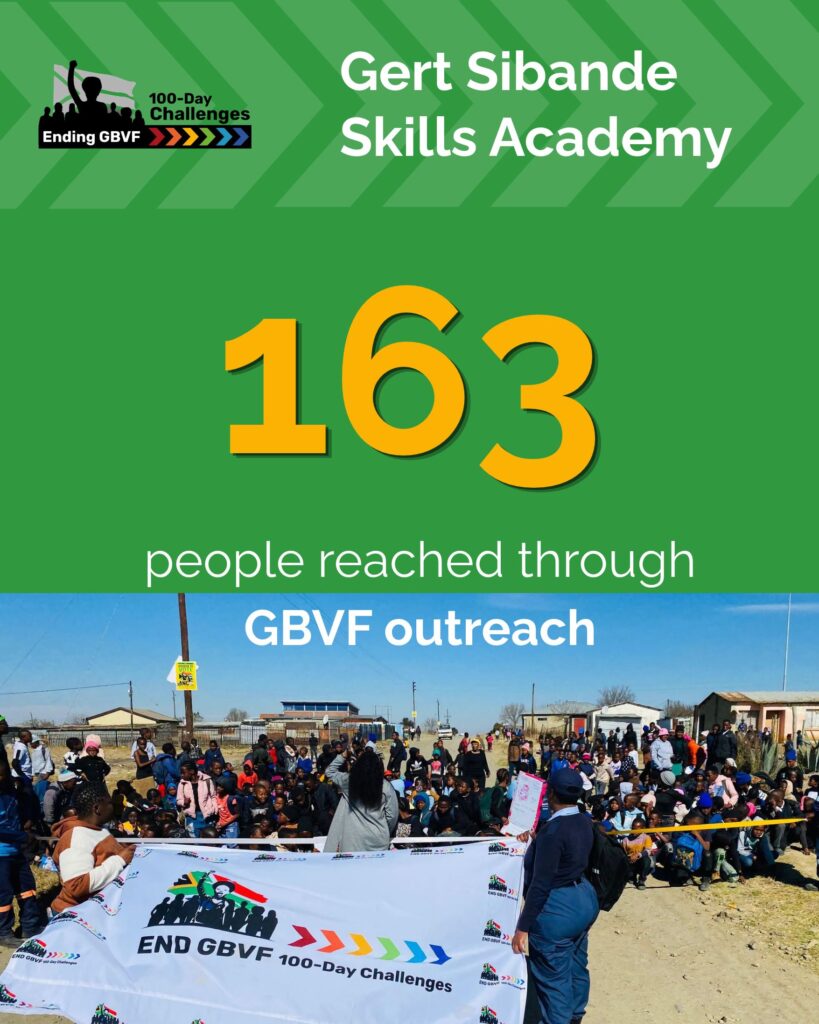
The team initially planned to engage approximately 30 school governing body members and teachers from local schools. By the end of the 100 days, it recorded an audience of 163, exceeding the number originally anticipated.
Alongside this outreach, stakeholders met weekly to track cases and referrals. A simple dashboard recorded cases reported, referred, supported and closed, helping the team keep track of progress.
This is an important part of responding to GBVF. Once someone asks for help, there needs to be a way of following up on the assistance they require. Regular meetings gave stakeholders a shared process for reviewing cases together.
The team reported that people received psychological support and were linked to services. It also described increased trust, noting that students knew where to go for assistance.
Sustaining the work
The experience helped the team identify what is needed beyond the first 100 days. Its priorities include an enforced GBV policy and a clear referral system, alongside funding for ongoing engagement.
The team also wants GBVF education included in orientation and the curriculum. This would introduce information as students enter the academy and provide occasions to revisit it during their studies.
They intend to undertake another 100-Day Challenge, encouraged by what focused actions achieved. Their experience shows how a college team can respond to students’ concerns while improving coordination behind the scenes, so that conversations about GBVF are accompanied by access to support and continued attention to the cases brought to them.
Drakenstein Municipality