
The team is collaborating with the North West Department of Education, Department of Social Development, SAPS, National Prosecuting Authority (NPA), Commission for Gender Equality (CGE), Office of the Premier and TVET colleges. They explained that bringing these stakeholders together was intentional. While they have different responsibilities, they are contributing across the different goals that make up the challenge.
Getting reporting to work as it should
In schools, the team wants to increase the number of learner pregnancies and sexually related matters formally reported by educators by 30% from the Day 1 baseline. It is also aiming for a 25% increase in the number of participating schools that have a documented sexual harassment policy in place.
Reporting was selected as a focus because some learner pregnancies may involve circumstances that require mandatory reporting, yet these cases are not always formally recorded. Team Leader, Gathel Moyo explained that although educators may know about Form 22 (which is used to report suspected abuse) but some are reluctant to complete the process because they are concerned about being called as witnesses in court.
Training educators has therefore become part of their mission. The Department of Education is working with educators and learner support agents across the district to strengthen understanding of mandatory reporting and the policies schools are expected to implement. Up to date, 64 teachers have been trained.
Following what happens after a case is identified
Other team members are working on different parts of the GBVF response. SAPS and the NPA aim to reach at least 600 learners through sessions at six identified schools. The Department of Social Development is working towards documented follow-up for 80% of identified survivor referrals. Participating TVET institutions want to increase GBVF referrals made by students by 30%.
Reporting at TVET level has brought its own questions. Students approach social workers for support, but the team is not seeing the same engagement when it comes to GBVF cases. This has raised questions about whether students are reporting elsewhere and what may be preventing them from using the support available on campus.
Giving learners a role in prevention
Another part of the team’s approach is a school debate programme involving selected schools across five sub-districts. Learners will engage with violence in schools and GBVF, while participants will be connected with social workers and SAPS officials in their areas. Some schools have already formed learner groups, with Grade 9 learners being trained and mentored to run campaigns within their schools.
Taking information into community spaces
The work also reaches into communities. The team aims to reach at least 500 community members through GBVF outreach and establish information corners in five Mafikeng libraries, where residents can access information about GBVF and available services.
The 100-Day Challenge gives the team a defined period to try these different approaches and track progress against the goals it has set. Some results, such as changes in reporting and referrals, can be measured within the 100 days. The team is more cautious about drawing conclusions on behaviour change, recognising that this will take longer to understand as learners, educators and community members take what they have learned back into their schools and communities.
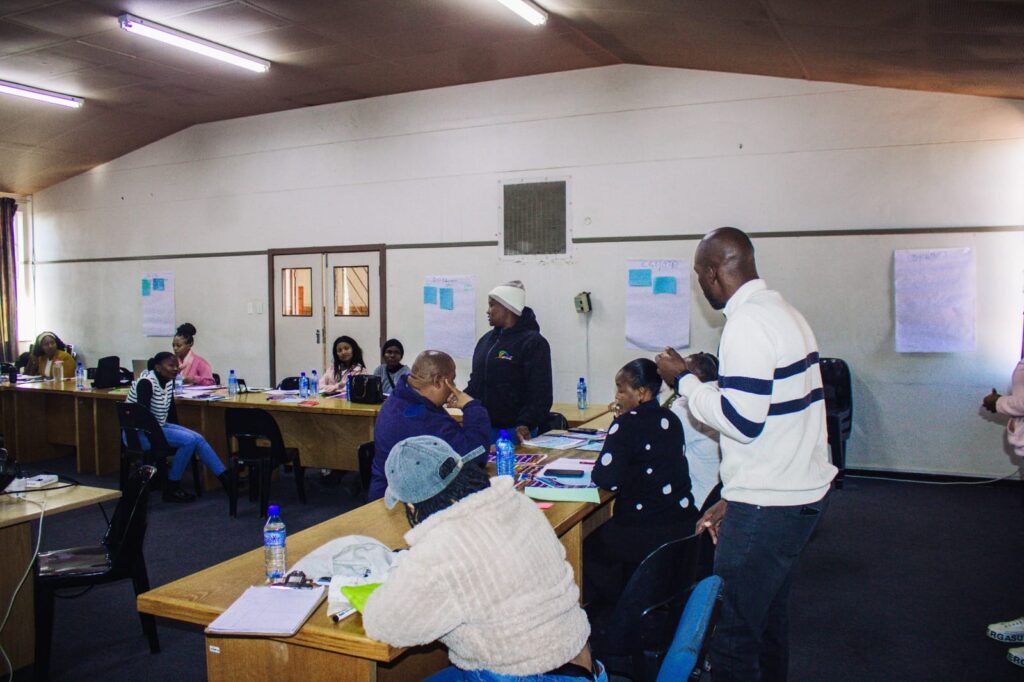
Mafikeng