
THE MOVEMENT STORY
Highlights of the Unfolding Story

There is a movement underway.
No fanfare. No big pronouncements. Simply people coming together and committing to do something about the scourge of gender-based violence and femicide (GBVF) in South Africa — and then actually doing it.
This is the story of the End GBVF 100-Day Challenges: a movement that grew from a single court intervention in 2021 into a national methodology for turning policy into measurable, local action.’
2021
5 x 100-Day Challenges (Municipalities) and 11 x 100-Day Challenges (DOJ)
2022
7 x 100-Day Challenges (End GBVF Collective) and 4 x 100-Day Challenges (Municipalities)
2023
100-Day Challenges (Municipalities, Courts & TVET’s)
2024
100-Day Challenges (Municipalities, Courts & TVET’s)
2025
A total of 69 PSET and TVET college campuses. 41 teams from Courts, Legal Aid and SAPS. 65 teams from Municipalities, OTPs, and the Department of Social Development.
2021 - Where it Began
The End GBVF Collective — an organically formed group of public, private, and non-profit activists — took it upon themselves to translate the National Strategic Plan (NSP-GBVF) into action.
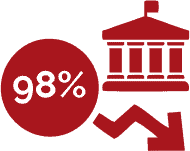
In 2021, the Department of Justice and Constitutional Development (DOJ), with support from Collective members, pioneered the use of 100-Day Challenges to clear a backlog of domestic violence protection orders in eleven courts. Despite COVID-19 extending the timeline, the backlog was reduced by 98% in 120 days. The result proved one thing: local actors, given the right structure and urgency, can move the needle.
2022 - Testing the Model
Localising the National Strategic Plan

Eleven pilot 100-Day Challenges were organised, each aligned to a pillar of the NSP. Teams were fielded across the country, and coaches were trained to support them. Three of those early stories illustrate what the model looked like in practice.

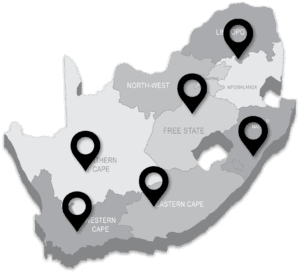
In the Frances Baard District of the Northern Cape, the team set out to reduce sexual offences in Phutanang, Galeshewe — a recognised GBVF hotspot that had previously received little national support. Working without large budgets, they repaired and installed 62 street lights, conducted 60 door-to-door awareness campaigns, ran dialogues with men and boys, and mobilised partners including SAPS, the NPA, and civil society. SAPS data recorded a 45.5% reduction in reported rape cases in the area. The Frances Baard District GBVF Forum was formally launched as a direct outcome.

In Greater Tzaneen, Limpopo, the team focused on encouraging survivors of sexual offences — particularly minors — to report cases and access support rather than resolving matters within families or through traditional structures. They ran 40 targeted awareness campaigns in schools and villages, introduced a mobile office model bringing police, social workers, and prosecutors directly into communities, and secured temporary shelter through local churches and community members. Reported cases increased by 37% over the challenge period. More significantly, the rate of case withdrawals involving minors dropped by over 70%.

In Lejweleputswa, Free State, the team tackled the referral gap: survivors in the district knew where violence was happening, but the systems for getting them into support services were fragmented. The team ran ten community outreach campaigns, mapped the referral system, structured sub-teams across different areas of the Matjhabeng municipal region, and created safe spaces for people to share experiences for the first time. GBV referrals to psychosocial services increased by 262%, with 1 092 victims and survivors accessing services in a single month.
These pilots revealed consistent early lessons: local ownership accelerated results, weekly accountability meetings held teams together, and collaboration across institutions produced outcomes no single department could achieve alone.
Big lesson learnt:
One early setback also shaped the methodology going forward. A team attempting to integrate court information systems created a mobile app that could not replace paper-based processes because institutional leadership had not been brought along. This highlighted the need to combine the 100-Day Challenge approach with deliberate leadership work.
2023 - Building the Capacity
With support from the Ford Foundation, the focus shifted from running 100-Day Challenges to building the institutional capacity to organise them. Eighty-five Team Coaches and Challenge Strategists were trained, each required to support a live 100-Day Challenge team as part of their practicum. 80 challenges were completed across courts, municipalities, and TVET colleges.
Highlights:

Courts
In courts, the average case backlog was reduced by 43% in 100 days.

Municipalities
In Drakenstein Municipality, over 800 young people were engaged in positive sports and recreational activities to interrupt cycles of violence. Mossel Bay Municipality established four GBVF hotlines now operational 24/7.

TVET Colleges
At Taletso TVET College in North West, the team created safe spaces and increased social worker visits across three campuses.
Beyond the results achieved through 100-Day Challenges and the capacity to support these developed in courts, municipalities, and TVETs, 2023 was a year of intense innovation for the movement. Below are some highlights.

A GBVF organisational maturity “health check” was developed.
This anonymous survey helps an organisation assess its level of maturity when it comes to behaviours, practices, and policies related to gender-based violence and femicide.

600 new organisations registered as Amplifiers in 2023.
As part of their training, Ambassadors did a 10-Day Challenge to sign up as many organisations as they could as “GBVF Amplifiers” – allies to the movement.
A prerequisite for this was to undertake the health check – starting from the belief that “charity begins at home”. Another prerequisite was to complete a GBVF 101 online course.

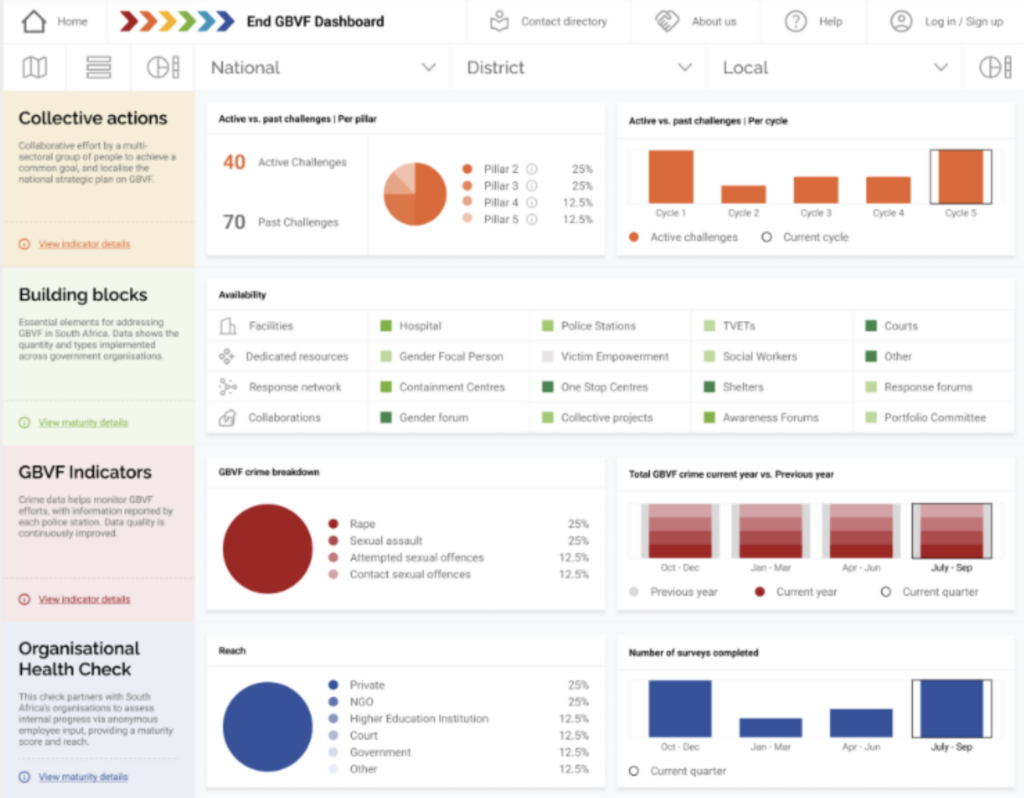
The End GBVF Municipal Dashboard is under development.
The dashboard tracks both incidence data on GBVF in each municipality and the robustness of the various systems and building blocks that indicate how serious and advanced a municipality is in preventing and ending gender-based violence and femicide. It was piloted in three provinces, and it will become available to all municipalities in 2024.

Perhaps most importantly, in 2023, the ending GBVF 100-Day Challenges became more firmly embedded in various institutional mechanisms of government.
This included the endorsement of – and engagement in – 100-Day Challenges from leaders at the Department of Cooperative Governance and Traditional Affairs (Cogta), South African Local Government Association (SALGA), Department of Higher Education & Technical Training – TVET Colleges, Department of Women and Persons with Disabilities, and Department of Justice and Constitutional Development.
This bodes well for integrating this way of working into the machinery of Government, which is critical for making progress on the National Strategic Plan to prevent and end gender-based violence and femicide.
2024 - Momentum and Impact
137 challenges were completed in 2024. Three sector stories stand out.
Courts
At Ga-Kgapane Magistrate Court in Limpopo, a 100-Day Challenge team brought together court officials and SAPS members in weekly case review sessions. All 56 backlogged domestic violence cases were resolved within 100 days. The real shift was not only in the numbers. A long-standing blame dynamic between the judiciary and SAPS gave way to shared accountability and genuine operational trust.
Municipalities
The Capricorn District Municipality team focused on women’s economic empowerment as a prevention strategy. Starting from a baseline of 31% women-owned business representation in municipal contracts, the team reached 1,200 women through grassroots outreach, trained 60 in business compliance and tendering, and linked them to supply chain opportunities. By the end of the challenge, 39 of 52 (75%) municipal contracts were awarded to women-owned businesses. The initiative evolved into an ongoing capacitation programme embedded in municipal structures.
TVET Colleges
At Majuba TVET College, a team took on the challenge of breaking the silence on GBVF on campus, where the reported baseline was zero. Through blended awareness events and student-led interactive workshops, five survivors came forward for the first time. The 100-Day Challenge has since been embedded into Majuba’s yearly plans with a dedicated budget.
Further Develoment on the End GBVF Dashboard
The Goal for the End GBVF Dashboard: Accurate and consistent presentation of available statistical data on Gender-Based Violence and Femicide (GBVF) across national, regional, provincial and district and local levels to understand trends, identify high-risk areas, and develop targeted interventions.
Version 1 of the dashboard visualises data that is already publicly available. It will grow as more partners come on board and more information and functionality becomes available. Pillar 6 will develop this concept further as part of the bigger Data Warehousing project.

30-Day Organisational GBVF Maturity Challenge
In 2024 the 30-Day Organisational GBVF Maturity Challenge was introduced. Organisations participating in the Health Check survey will have the opportunity to do a 30-Day GBVF Maturity Challenge, which allows them to make a tangible impact on their GBVF maturity index by addressing critical gaps in policies, practices, or behaviours. Through a structured, collaborative process, the programme empowers senior leaders and their teams to prioritise, design and implement focused improvements within a short timeframe. This initiative fosters rapid organisational growth and lays the groundwork for sustained progress. The 30-Day Maturity Challenge was piloted with SANPARKS, with remarkable results.
2025 - Deepening the Work
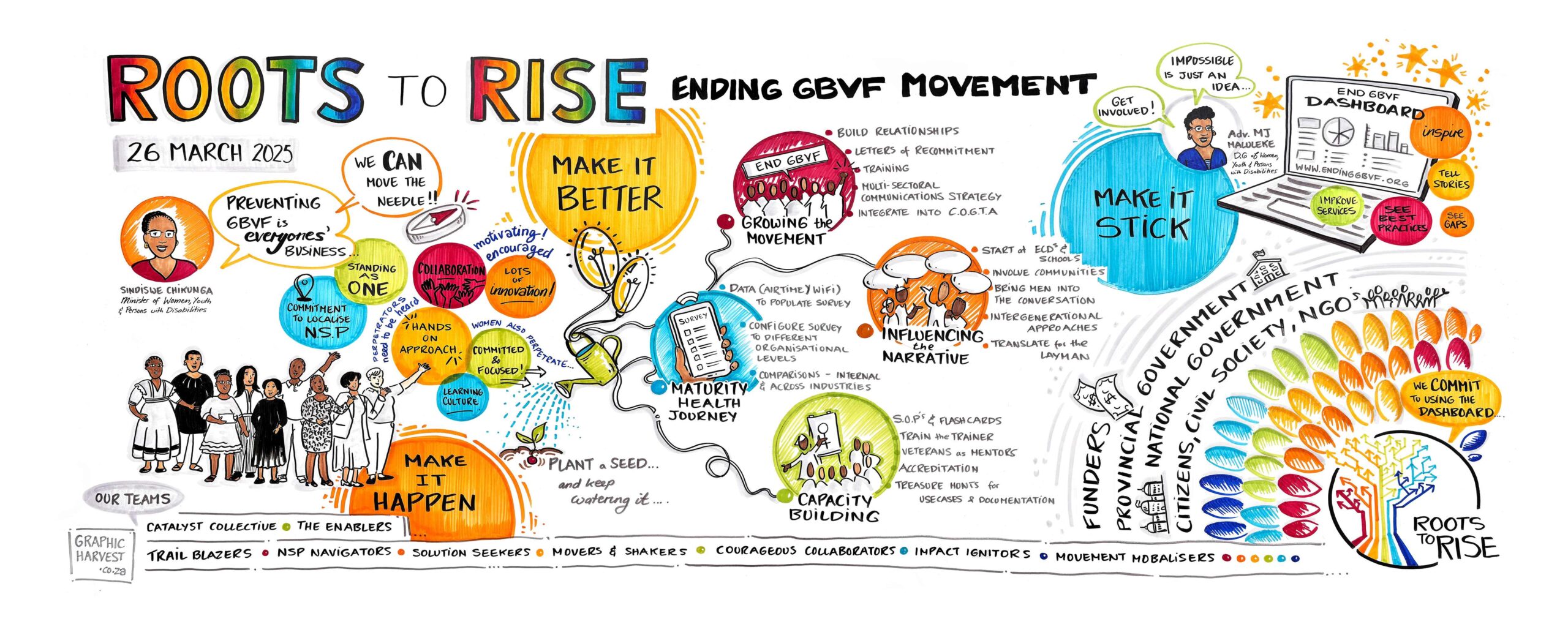
On 26 March 2025 The World of Impact and Eish Impact Africa hosted a national event, Roots to Rise.
Change Makers from across the country came together to drive real solutions for ending GBVF. These are the individuals who show up every day – supporting survivors, advocating for justice, and proving that change is possible when we work together. We were honoured to have the Minister of Women, Youth and Persons with Disabilities, Hon. Sindisiwe Chikunga, officially launch the End GBVF Dashboard. Her presence reaffirmed the government’s commitment to gender equality and the collective efforts of local government, courts, civil society and funders in driving systemic change.
100-Day Challenge Projects in 2025
161 End GBVF 100-Day Challenges took place in 2025 across courts, municipalities, and TVET colleges. The stories that emerged show a movement that has moved well beyond awareness. Teams were solving operational problems, building systems that outlast the sprint, and reaching people that earlier iterations of the work had not reached.
Over 40 teams in the justice cluster participated.
Thohoyandou cleared 889 cases in 100 days by introducing a regular morning briefing where magistrates, clerks, and prosecutors aligned on every case before court began, and by calling every person scheduled for court the day before to confirm attendance.
Ga-Kgapane cleared its entire domestic violence backlog by training clerks to verify respondent addresses at the counter, solving a small administrative problem that had been blocking cases for years.
Nkowankowa wiped out all maintenance and domestic violence backlogs and cleared 80% of divorce cases through daily information-sharing between court staff and SAPS.
Polokwane ran the Worthy Witness Project, assigning a Court Preparation Officer to meet witnesses before they testified, explain the process, and arrange support. The project did not slow case progression: 23 cases were finalised, with 7 reaching judgment and 4 reaching sentencing.
Kroonstad kept the court running for 53 days with a single judicial officer after the lead magistrate fell ill, using a weekly written list to SAPS to maintain accountability for outstanding dockets.
The consistent finding across all courts was that the biggest gains came not from new resources but from better coordination, shared information, and administrative precision.
Challenges took place across municipalities, OTPs and DSD.
Eastern Cape DSD trained 70 women in sewing and computer skills, providing each graduate with a full starter kit including a sewing machine, laptop, and data. Thirty women received additional pattern-making training. Ten received workplace placements with stipends.
King Sabata Dalindyebo Municipality branded 100 taxis with prevention messages and secured signed pledges from taxi men through an interactive radio dialogue that brought together traditional leaders, religious leaders, and taxi bosses.
Drakenstein Municipality opened a permanent GBVF Hub.
Stellenbosch increased GBVF reporting, established dedicated trauma rooms in police stations, and arranged unmarked transport vehicles so that survivors from outlying areas could access care after hours without fear of being seen.
Waterberg District Municipality finalised 73% of GBVF cases despite covering a geography of mining settlements, rural villages, and small towns spread across long travel distances, using virtual coordination and disciplined case tracking to keep matters moving.
The clearest pattern across municipal teams was that change occurred when institutions went to people rather than waiting for people to come to them.
Projects ran across the post-secondary education sector.
Maluti reduced reported bullying by 78% and cyberbullying by 63% using student surveys at the start of the challenge to design interventions based on actual knowledge gaps.
Majuba trained 127 peer educators and formally recorded 23 GBVF cases by formalising referral pathways with the SAPS Family Violence Unit and the Thuthuzela Care Centre, and by introducing QR codes for anonymous reporting.
West Coast formalised 11 institutional partnerships, trained 585 students, and reached 40 000 accounts through social media.
Gert Sibande reached nearly 8 000 people across five campuses and increased school-level reporting by 27%. Across all six colleges, the clearest finding was that students engaged more honestly with GBVF when approached through conversation rather than formal presentations, and that peer educators extended the work’s reach into spaces that staff could not easily access.
The movement will continue to grow in 2026 and beyond.
